Top Things You Should Do Before Buying A Rural Home
February 16, 2024
February 16, 2024
If you're planning to move away from the city and live a more simple life in the country, take note that it does not come without its unique set of challenges. Here are a few tips to help you when you decide to buy a rural home.
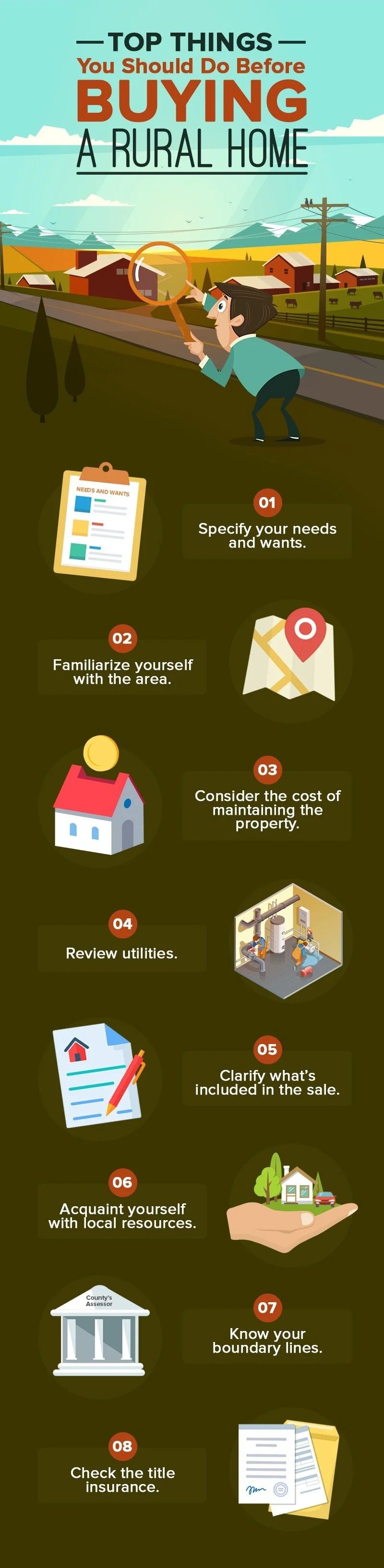
Before you plan to buy a home in a rural area, you should check with yourself what your reasons for buying are. What are you going to make out of this property? Are you using it as a vacation home or a primary residence? Are you going to use the land for agricultural purposes? Do you need your lot to be arable? One way to do this is to make a list of what you need and want your living conditions to be. Include your non-negotiable conditions and nice-to-haves. What you put into this list will help you narrow down the rural areas and properties that would suit you, and would also be of useful information to your real estate agent.
Unless you've lived in this area before and decided to move back, the ideal action when you’re moving to an unfamiliar location is to rent in the area first. However, time and other resources can sometimes make that impossible—leaving you with the option to simply do your research on the area. If the agent you hired happens to be from there, you can ask them to give you information but make sure to still do YOUR homework. Here are some items to cover:
The cost of maintaining the property depends largely on the size of the house and the land. The more acres you have, the more you'd have to spend. You're also going to need bigger tools in place of the ones you have, or you may need ones you may not have while living in the city such as a 4-wheeler truck or a tractor. And remember that the costs are not just limited to the monetary one; you also have to include the cost of your labor in cleaning waste, mowing the lawn, etc. Under certain circumstances, you may also need to consider if you could afford an extra hand in the maintenance. Take all of these into account and deliberate if you could afford and sustain all those expenses for the next 5 years and more.
Utilities in a rural area will differ greatly from those used in suburban areas. An important thing to note is that rural utilities are not tied to commercial systems. Check for each of these utilities and if anything happens to not be within your preference, negotiate with the seller (and the community) how it could be made to suit your needs.
Septic systems - rural areas depend on septic systems for waste disposal. If the house you're planning to buy is hooked to a septic system, it lowers your taxes because municipalities would only bill those who are connected to a public sewer system. The catch from this is that you may have to replace the system should it break down, and that would be costly. A way to address this is to include a contingency on the septic system requirement of inspections and a septic pump on your contract with the seller.
Power supply - power lines in rural areas tend to be flaky due to weather disturbances
Well water systems - some rural homes could only utilize well water systems instead of a public water source. The advantage to this is that you could cut down on your water bill as water from this is free, and you would only have to pay for electricity that keeps it running. But the downside to this is that it comes from groundwater, and would require tests and routine maintenance in order to make sure that the water is safe for use.
Heating systems - Homes in suburban areas are heated by natural gas, while those in rural areas use either oil or propane. If the house uses oil, the BTU is higher than with gas, and it usually costs less than a gas-fired furnace. But take note that it’s more costly to purchase oil instead of natural gas, and it requires more routine maintenance. Alternatively, if the house uses propane, the average life expectancy is higher than with a gas fired furnace. The drawback to it is minimal compared to the others in that its tank is a sight for eyesore. But that could easily be remedied if you opt to have the tank buried.
Specify in the contract what feature, building, and structure of the home you think are included in the sale because it could be taken down or away by the seller. At the minimum, and if applicable, the sale should include these:
Ask for assistance from local offices regarding issues that you need help on such as property maintenance, ecosystem conservation, etc. Here is a list that could help you with your specific needs:
County USDA Farm Service Agency (FSA) office - After purchasing the property, you have to take the deed to the FSA office to register it and be informed and consequently transfer any Conservation Reserve Program (CRP) or base acre payments to you. They educate rural homeowners through a variety of programs on matters regarding conservation such as erosion control, wildlife habitat, pond construction, and the likes.
Southern States - It's an established farm co-operative that may help you by guiding you through your concerns regarding agriculture -- what the best feeds are, what fertilizers to use, etc. Check if Southern States has a cooperative in your location, or find another supplier if they are not within your vicinity.
Local rural lender - Primarily, they can give you contacts to local lawyers and other service providers such as farming managers and dozer operators. They are also equipped with vital local knowledge that may help you with your concerns.
The step to guarantee how many acres of land you're buying (and will be taxed on) is to visit the county’s assessor office. They could present you information on the property with a description of its metes and bounds. Check if there is a difference from the original listing and ask the assessor to explain.
Inspecting the title insurance lets you know of the issues associated with the property that may not have been disclosed such as the property being recorded as a toxic dump site. There are also other issues that could be attached to it such as unknown or unresolved liens. The county's recorder can pull up this document for you as it is available to the public.

Understand the pros and cons of interest-only mortgages to determine if this financing strategy is the right fit for your home buying goals.

In Houston, the question is often not “Should I wait?” It is “What is waiting likely to cost me, and is that tradeoff actually worth it?”

The right strategy depends on your finances, your comfort level, and how competitive the market is in the area where you are buying and selling.

Discover why your driveway is a critical component of your home's curb appeal and how simple updates can boost your property's market value.

Discover why outdoor living spaces are a top priority for luxury home buyers in Houston and how they can transform your property's appeal.
Don't let landscaping costs surprise you. Learn the essential maintenance expenses every home buyer should factor into their budget.
Learn the real reasons homes sit on the market and what sellers can do to attract buyers and sell faster in 2026.

Homeowner
Selecting the ideal paint color can easily transform any space, creating a mood and style that reflects your personality and the room's purpose.

Deciding between repairs and selling as-is? Learn how to maximize your home's value and protect your peace of mind before listing in Houston.
Real estate can feel overwhelming, but you don’t have to navigate it alone. Our team is here to bring clarity to the process, advocate for your goals, and guide you every step of the way.

KRAASE PROPERTY GROUP
1220 AUGUSTA DR HOUSTON, TX 77057