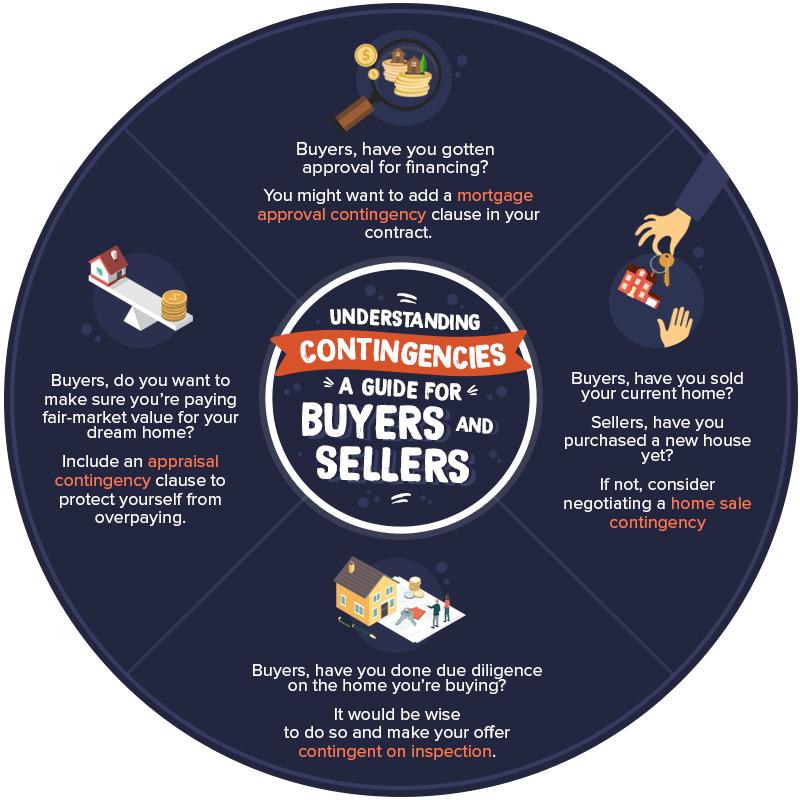
Understanding Contingencies: A Guide For Buyers and Sellers
February 16, 2024
February 16, 2024
When looking for homes online, home buyers may come across a property with a “contingent offer” status. This means that an offer has been made and accepted, but the sale is still conditional while both parties work on meeting certain criteria.
These criteria, or contingencies, are actions that must be met for a contract to become binding. Both the seller and the buyer must both agree to these terms, and it is made official by including a “contingency clause” in the real estate contract.
Whether you are a buyer or a seller, a solid understanding of contingencies is a must! Below are the 4 most common types, and what they mean for both buyers and sellers:
In a lot of cases, a financing or mortgage contingency is worked into the contract to protect the buyer in case he or she is unable to obtain financing within a certain period of time. With this type of contingency, the buyer can reclaim his or her earnest money and legally walk away from the deal if the same terms and numbers stated in the contract cannot be met due to issues with financing.
The contingency clause typically states a specified number of days that the buyer can secure a mortgage loan, within which he or she has the freedom to terminate or follow through with the contract—depending on whether or not financing has been successfully obtained. Sometimes, the seller may agree to a request for an extension, but buyers must make sure to also have this in writing.
Anyone buying or selling a house knows timing and financing can be hard to align, and that is where a house sale contingency can benefit both buyers and sellers.
For buyers, this type of contingency allows buyers a specific amount of time to sell their current homes in order to finance the one they're buying. A house sale contingency may also indicate how much the current home must sell for so that he or she can afford purchasing the new home. For example, if the buyer had to accept an offer below the minimum price indicated in the contingency clause, he or she can back out of the contract without legal consequences.
In a seller’s market, house sale contingencies may not be advisable, as sellers are in a privileged position to choose the strongest offer among multiple bidders. If a buyer offers to buy the house on a house sale contingency, the seller may be forced to pass up on better offers while waiting for the buyer’s house to sell.
However, if it is a slow market and the seller is willing to consider a house sale contingency offer, it is in his or her best interest to accept one in which the buyer’s current house is already under contract and just waiting to close.
While house sale contingencies are more commonly negotiated in the interest of the buyer, sellers who are timing a move from one house to another can make good use of this contingency as well. The clause will indicate a certain amount of time for the seller to find a new house and get that home under contract before finalizing the sale and turnover of the current house.
With an inspection contingency, the buyer reserves the right to perform due diligence on a house before finalizing the sale. This is done with a comprehensive inspection of the home, which is performed by a professional on behalf of the buyer within a specified time period.
The terms may vary, and the buyer has several courses of action depending on the inspection report:
Approve the report and follow through with the purchase
Refuse to buy the home if certain agreed-upon standards are not met, have earnest money returned
Perform a follow-up inspection if certain areas need to be examined further
Ask the seller to perform the necessary repairs before proceeding with the sale
Request a price reduction equivalent to the estimated cost of repairs
The seller may refuse to cover the repair costs, in which case the buyer may freely back out of the sale and refund his or her earnest money deposit.
An appraisal contingency helps make sure that the buyer will be paying for the fair-market value of the home. If the property’s appraised value turns out to be lower than the asking price, the buyer reserves the right to back out of the contract and have his or her earnest money returned. However, an appraisal contingency may also include terms that will allow the buyer to push through with the sale even if the appraised value comes in below the listing price. In some cases, sellers may offer the house at a lower price just to seal the deal.
It is common practice in hot markets for home buyers to waive this contingency in order to strengthen their offers. In such cases, buyers need to be prepared to pay for the difference in cash, since most lenders will only put up the amount for the appraised cost.
Here is a sample scenario from realtor.com:
“For example, let’s say you have a loan that covers 90% and you need to put 10% down for a home selling for $500,000. If the house is appraised at $475,000, the lender is only going to cover 90 percent of that appraised value, or $427,500. And instead of a $50,000 down payment, you would be expected to put down $72,500 to cover the difference. Waiving this contingency can be a gamble.”
At the beginning of any transaction in real estate, both buyers and sellers can propose almost any kind of contingency. This does not mean that all will be accepted, and there may be few negotiations to end up with a compromise. Contingencies must always be agreed to by both parties and must always be put in writing. Negotiations can get tricky though, and it's always best to have a professional real estate agent guiding you at all times.

Understand the pros and cons of interest-only mortgages to determine if this financing strategy is the right fit for your home buying goals.

In Houston, the question is often not “Should I wait?” It is “What is waiting likely to cost me, and is that tradeoff actually worth it?”

The right strategy depends on your finances, your comfort level, and how competitive the market is in the area where you are buying and selling.

Discover why your driveway is a critical component of your home's curb appeal and how simple updates can boost your property's market value.

Discover why outdoor living spaces are a top priority for luxury home buyers in Houston and how they can transform your property's appeal.
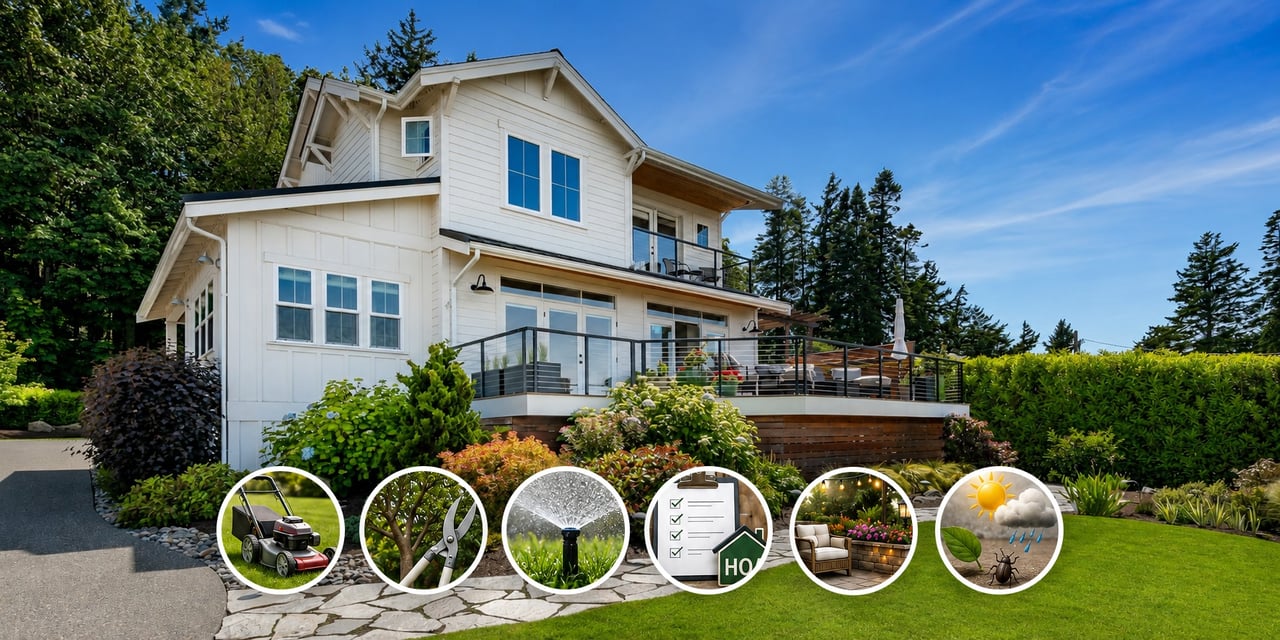
Don't let landscaping costs surprise you. Learn the essential maintenance expenses every home buyer should factor into their budget.
Learn the real reasons homes sit on the market and what sellers can do to attract buyers and sell faster in 2026.

Homeowner
Selecting the ideal paint color can easily transform any space, creating a mood and style that reflects your personality and the room's purpose.

Deciding between repairs and selling as-is? Learn how to maximize your home's value and protect your peace of mind before listing in Houston.
Real estate can feel overwhelming, but you don’t have to navigate it alone. Our team is here to bring clarity to the process, advocate for your goals, and guide you every step of the way.
KRAASE PROPERTY GROUP
1220 AUGUSTA DR HOUSTON, TX 77057