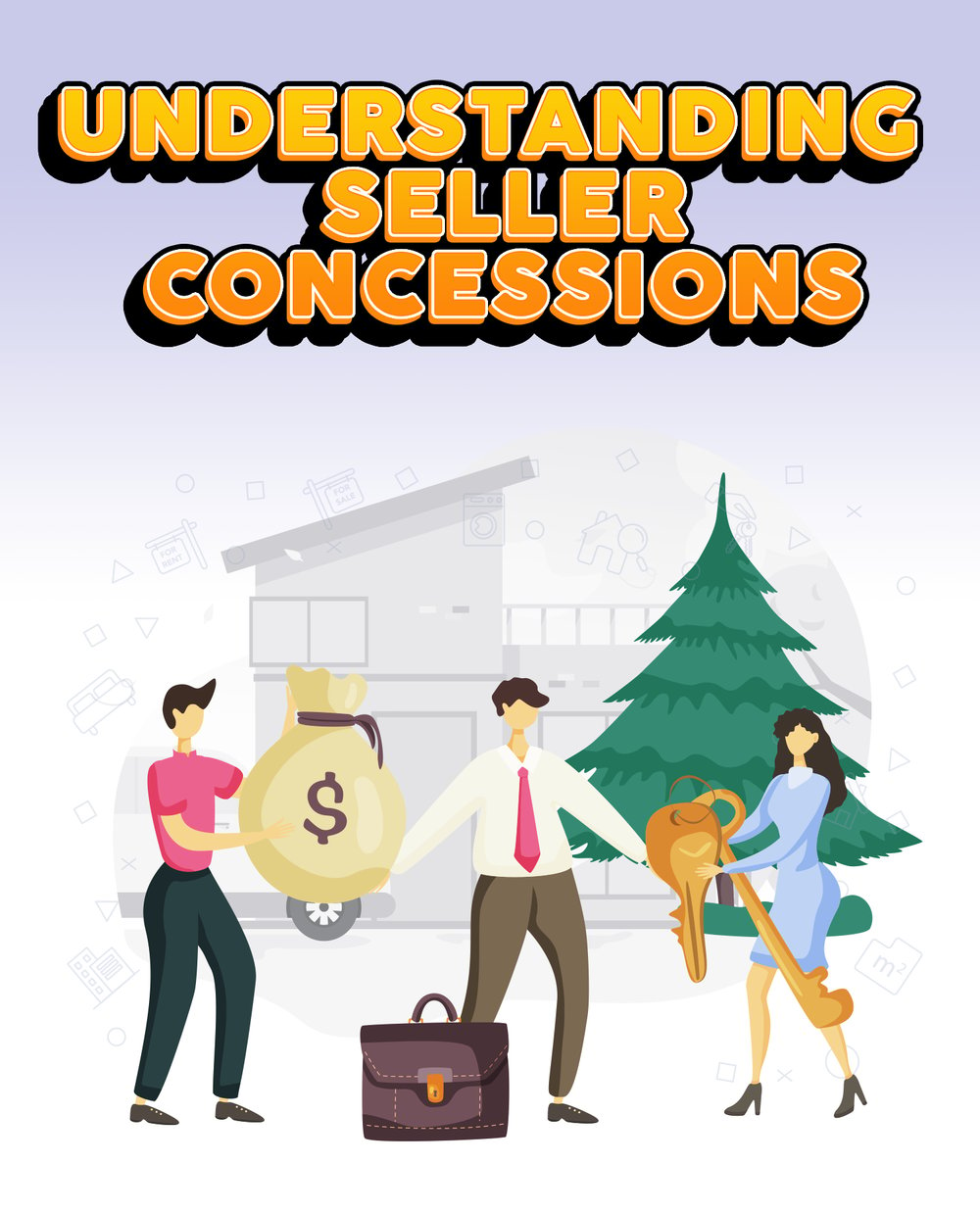
Seller concessions, which are also called seller assist or seller contributions, are the costs a seller agrees to pay to help the buyer when closing on the home. It's essentially a gift that a seller can offer to reduce the amount future homeowners have to pay out of pocket. While both the buyer and seller have closing costs they’re responsible for, a buyer’s closing costs are usually 3% to 6% of the home’s purchase price. This is aside from the down payment, which means buyers need to have a good amount of money saved up just to get the keys to their dream home. To sweeten the deal and close quickly, sellers can either pay a flat percentage of the buyer’s closing costs, or buyers can ask them to cover a specific expense, such as the home inspection or home appraisal. Either way, seller concessions are typically negotiated as part of the buyer’s offer on the home purchase. But while they’re relatively common in real estate transactions, they’re far more likely to occur in a buyer’s market. According to the National Association of Realtors’ 2023 Profile of Home Buyers and Sellers, 20 percent of sellers offered incentives to attract buyers. Seller concessions can be received on all types of home loans, including conventional, FHA, VA, or USDA loans. However, some rules set limits on the maximum amount that a seller can hand over, depending on the loan type. We’ll discuss more about this later on. For home buyers, your closing costs will vary depending on your situation. In general, however, you should expect to pay 3% to 6% of the home's value in closing costs, aside from your down payment. This means you need to have a good amount of money saved up just to get the keys to your dream home. Here are some examples of closing costs and fees that a seller might be willing to cover: - Property taxes
- Attorney fees
- Home appraisal
- Mortgage origination fees
- Real estate tax service fees
- Title insurance
- Mortgage discount points
- Inspection fees
- Homeowners insurance
- Homeowners association fees
- Purchase of a home warranty for the buyer Likewise, a seller concession does not always have to be monetary. It can be other things connected to a home that a buyer may put value into, or anything that can sweeten the deal for the buyer. For instance, a buyer may ask for any existing furniture, appliances, or other loose home items, and the seller agrees to leave them even though they’re not initially included in the sale. Asking for seller concessions is a part of the negotiation process involved in a real estate transaction. But it's important to know when sellers may be more likely to offer concessions, and it can be in any of these situations: - **It’s a buyer’s market**
In this circumstance, sellers have less negotiating power. And since fewer buyers looking for homes than there are houses for sale, sellers can better entice a fair offer by giving a concession. - **When the house is overpriced**
Instead of having to lower the asking price, a seller may be willing to offer concessions. - **When the home has been on the market for too long or it’s been a slow season.**
A home that has been on the market for more than a few weeks may raise a red flag to potential buyers. To help sell their home, a seller may be willing to make concessions. The same thing if a seller needs to move during a slow season, especially during the winter months when there may be fewer home buyers. - **When a seller needs to move quickly**
It may be worth it for some sellers to agree to concessions if they feel it will help expedite the sale of their home, especially if they need to relocate as soon as possible or have already bought a new home, hence paying for two mortgages at the same time. Seller concessions can benefit both the buyer and the seller. But just the same, it does have possible disadvantages on both sides. **For Buyers** **Pros**
- You could save money on closing costs, which may lighten the financial burden of purchasing a home.
- Seller concessions can significantly reduce the capital you need upfront, which could allow you to close the deal.
- It can be a good alternative to repairs. If the home inspection report reveals something wrong with the home, and the seller refuses to fix it, providing seller concessions can be a good compensation. **Cons**
- It could weaken your offer, especially if you're in a competitive market. If the seller might not be willing to pay some of the buyer’s fees, they might reject your offer quickly.
- If you include seller concessions into your loans, the loan balance goes up, which means you could end up paying more over the life of the loan. Since it can be tricky to determine whether it’s worth it to ask for seller concessions on your own, it’s best to hire an experienced real estate agent who understands the local market and can help you get the best deal. **For Sellers** **Pros**
- Concessions can help sell your property faster, especially if you’re in a hurry to close.
- It opens up opportunities for a larger pool of potential buyers. **Cons**
- You are decreasing their net profit gain from selling the property.
- Depending on what you’ll provide as a concession, it can be an added cost you need to consider, which can be a financial burden especially if you’re also in the market to purchase a different home and have closing costs of your own. Mortgage lenders set limits to the amount a seller can cover for the buyer mainly for two reasons. The first one is to ensure that the market isn't being artificially inflated, and the second is to help ensure the buyer isn’t being influenced to purchase a home they otherwise shouldn’t afford with the low closing costs. For conventional loans, which are loans issued by private mortgage lenders, the value of seller concessions is limited to a percentage of the purchase price of the home, based on the size of the buyer’s down payment. - Sellers may contribute up to 3% for a down payment of less than 10%.
- Sellers may contribute up to 6% for a down payment between 10% to 25%.
- Sellers may contribute up to 9% for a down payment of 25% or more. For government-backed loans, there are hard limits on the amount of seller concessions based on the purchase price instead of the down payment amount. - For FHA and USDA loans, sellers may contribute up to 6%.
- For VA loans, sellers may contribute up to 4%.